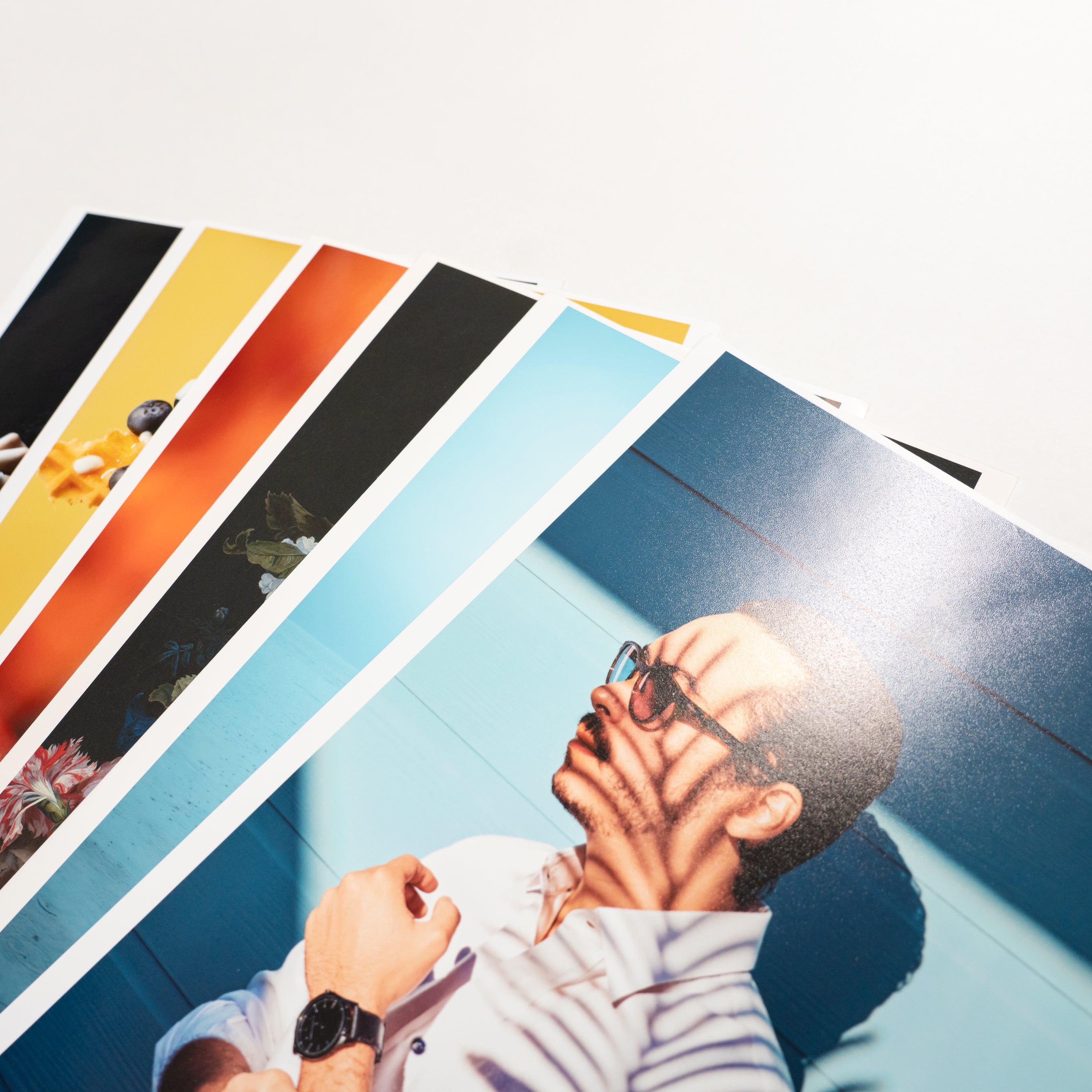
Breathtaking expressiveness. The unique value that photographic printing on washi paper brings to artworks
目次
この記事について

PHOTOPRI(フォトプリ)
プロ品質の写真プリントサービス
「PHOTOPRI(フォトプリ)」は、写真展クオリティのプリントを提供する専門店です。一枚一枚の色を丁寧に調整し、30種類以上の用紙から最適なものを提案。あなたの作品が持つ魅力を最大限に引き出すお手伝いをします。大切な作品を、最高の形で残しませんか?
Breathtaking expressiveness. The unique value that photographic printing on washi paper brings to artworks
Ordinary photo prints just aren't enough.
I want to give my work a depth and warmth that is unlike anything else, and a unique presence.
To all creators with such a spirit of inquiry, we at PHOTOPRI confidently recommend "printing photos on washi paper." The fusion of washi paper, a traditional Japanese material with over a thousand years of history, and modern, cutting-edge printing technology elevates your work from a mere record to a tangible work of art.
In this article, we will introduce in detail, along with examples, the secret behind why so many artists are now fascinated by washi prints, the appeal of photo printing on the highly acclaimed Awa washi paper , and the types of works that are best suited to washi paper.
(Replace with printed version)

Each fiber of the washi paper contains light and ink, breathing life into the artwork.
Why do artists choose "Washi"? Three attractions
The unique properties of washi paper are completely different from those of ordinary photographic paper, which creates unexpected chemical reactions in the artwork and deeply impacts the viewer's heart.
- Unique texture and warmth: The surface of washi paper is made up of intertwined long fibers, and no two pieces are the same. Its natural unevenness absorbs ink softly, creating a warmth and rich texture that cannot be found in digital data.
- Soft gradation and deep blacks: Washi paper diffuses light softly, resulting in soft highlights and soft, well-defined shadows. This is especially true for monochrome photography, where smooth, beautiful gradation and deep, deep blacks can be achieved.
- Ink that becomes one with the artwork: While glossy paper places ink on the surface, washi paper allows the ink to penetrate deep into the fibers. This allows the ink to become one with the paper itself, resulting in a natural, deep finish that seems as if the color was there from the beginning.
Perfect for Japanese paper prints! Recommended examples by genre
"Would my work be suitable for washi paper?" We will answer that question with concrete examples. These are genres where the characteristics of washi paper can be best utilized.
The soft gradation of Japanese paper is the true essence of monochrome photography. It gently depicts the texture of a person's skin and the deep emotions hidden in their gaze. The contrast between light and shadow will be expressed more poetically.

Needless to say, it's a perfect combination. Digitally drawn illustrations have the aura of being drawn on real Japanese paper. The texture of Japanese paper is also realistically reproduced, even with the bleeding of ink and the faded brush strokes.

Landscape photographs where light and air blend together, such as fog, rain, morning mist, and sunlight filtering through the trees, go extremely well with washi paper. The washi paper gently envelops the light, further enhancing the fantastical atmosphere of the entire photograph.
PHOTOPRI's selection of "Awa Washi" - a fusion of tradition and innovation
At PHOTOPRI, we use the world-famous Awa Washi paper from Tokushima Prefecture as the medium for our washi prints. Our AIJP (Awagami Inkjet Paper), which inherits the tradition of 1,300 years of history while being optimized for modern inkjet printers, has been highly praised by artists both in Japan and abroad.
While maintaining the texture of traditional Japanese paper, it achieves a quality that allows for the long-term preservation of photographs and artworks. Its quality is so high that it is used in the collections of famous art museums overseas.
By combining this "Awa Washi" with our 2880dpi ultra-high definition giclee printing technology and the faithful color reproduction of RGB direct printing , we can create the highest quality washi photo prints that you won't find anywhere else.
Awa Washi lineup available on PHOTOPRI
| Paper Name | Features | Recommended use | Price guide (A4) |
|---|---|---|---|
| [Awa Washi] Kozo (thick paper), white | This thick and durable washi paper is made from kozo and has a warm texture. | Photographs, illustrations, calligraphy, and any other works that you want to convey a warm feeling | From ¥1,950 |
| [Awa Washi] Unryu (Lightweight White Paper) | This expressive washi paper has long kozo fibers woven into it like clouds. | Highly designed works and art that makes the most of the texture of the fabric | From ¥1,690 |
| [Awa Washi] Natural mulberry paper | Natural off-white color, soft and resistant to bending. | Japanese-style artworks, illuminated by light | From ¥1,950 |
| [Awa Washi] Bamboo Washi | Among Japanese paper, it has high color reproducibility and a relatively sharp finish. | Photography and detailed illustrations | from ¥1,710 |
*Please check the price list page for the latest prices.
Comparing the advantages and disadvantages of paper selection
While each has its own merits, they also have areas in which they excel and areas in which they are not so good at expressing things. Please check the comparison table and sample images.
■ Enjoy the change in color
Red is a color that is often seen in typical Japanese landscapes.
The vermilion of shrines and temples, the red of autumn leaves, and the reddish-orange of sunsets.
It's a very attractive scene, but the colors tend to change when you try to recreate it on washi paper. Rather than being faithful to the original data, it might be best to enjoy it as a kind of filter.
(Photo of the shrine)
・[Awa Washi] Bamboo Washi 170g/m2
This is a paper that produces a relatively strong red color.
・Thick white mulberry paper
This one has a very orange color to it.
- Kozo thick paper, natural
Combined with the yellow of the background, it gives off a stronger orange feel.
・Unryu Light White
■ Enjoy the texture of the paper
Monochrome (photo of lily)
One of the charms of washi paper is that you can enjoy its transparency and texture!
・[Awa Washi] Bamboo Washi 170g/m2
The paper is very white, so the contrast is quite clear.
・Thick white mulberry paper
The rough texture gives the light grey areas an exquisite texture.
- Kozo thick paper, natural
The light grey part looks a little brownish.
Monochrome artwork can be finished in colors other than black and white.
・Unryu Light White
The background and light gray areas allow light to pass through.
It's a fantastic finish!
■ Enjoying paper textures ②
I want to create a unique portrait finish!
For those people, I would definitely recommend trying printing with washi paper.
Below is a summary of the advantages and disadvantages in table form.
Please use the sample images above as a reference when choosing your paper!
| merit | Disadvantages | |
| [Awa Washi] Bamboo Washi 170g/m2 |
High color reproducibility. The paper base is solid white. |
The texture of washi paper is subdued |
| Kozo thick white paper |
Powerful expression is possible. It adds a rough texture. |
Colors such as red are prone to change |
| Kozo thick paper, natural |
It gives an antique feel. It adds a rough texture. |
Poor color reproduction |
| Unryu Light White | The finished product has a Japanese paper-like feel. It has a sheer feel. |
It is thinner than other paper, so handle larger sizes with care. |
Summary: Reach heights of expression that cannot be achieved with ordinary paper.
Printing photographs on washi paper is not just a printing process. It is a creative activity that infuses the work with traditional Japanese beauty and warmth, and allows you to discover new value.
- Black and white photography is deeper and more poetic.
- The illustrations have the appearance of authentic hand-painted paintings.
- Landscape photography captures the atmosphere.
- All of his works exude warmth and luxury.
If you are looking for new possibilities in your artistic expression, we recommend you try PHOTOPRI's washi prints. When every fiber of the paper absorbs the ink and is enveloped in light, you will surely be moved like never before.

First, try a "trial print" using your own data. See for yourself the feel, texture, and compatibility with your work.
Check out PHOTOPRI's washi printing service
Related keywords
この記事を書いた人
PHOTOPRI(フォトプリ)
プロ品質の写真プリントサービス
「PHOTOPRI(フォトプリ)」は、写真展クオリティのプリントを提供する専門店です。一枚一枚の色を丁寧に調整し、30種類以上の用紙から最適なものを提案。あなたの作品が持つ魅力を最大限に引き出すお手伝いをします。大切な作品を、最高の形で残しませんか?